Loading...
Serving Grand Island, NE and surrounding areas. (308) 403-0892
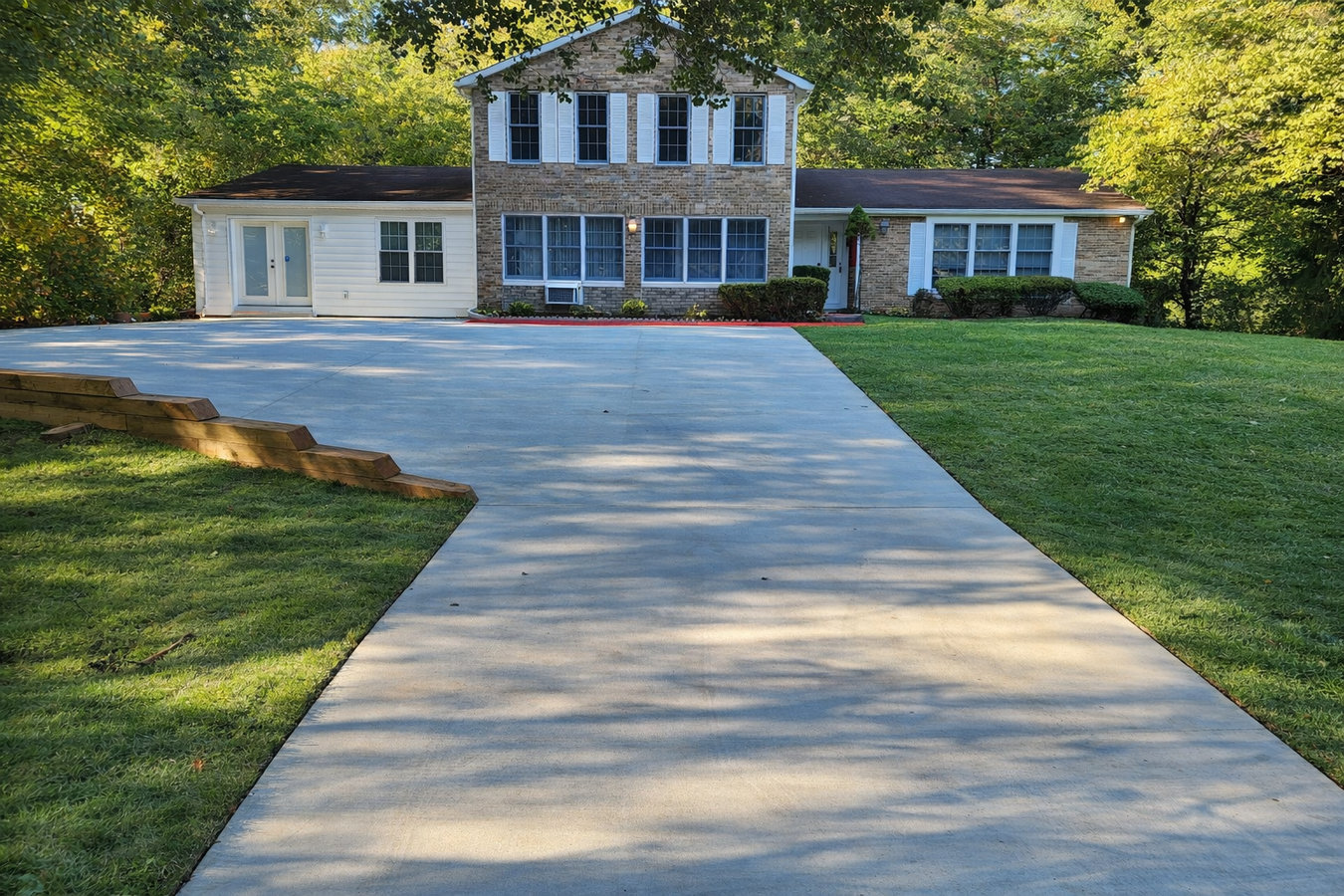
Your driveway takes a beating from Nebraska winters and clay soil. We build it right the first time so you are not patching it every spring.
Concrete driveway building in Grand Island replaces or installs a solid concrete surface by removing the old material, grading and compacting the ground, and pouring a properly reinforced slab - most residential jobs take two to four days from start to finish, plus a week of curing before you drive on it.
If your current driveway is cracking, heaving, or draining poorly, those are signs that the original installation did not account for Grand Island conditions - the freeze-thaw cycles, clay-heavy soils, and spring rains that stress concrete here every year. A new concrete driveway built with the right base prep and concrete mix will last 30 to 50 years. While you are thinking about the exterior of your home, our concrete patio construction service adds usable outdoor living space at the same time.
Hairline cracks are normal over time, but cracks wider than a quarter-inch that seem to grow after every winter are a sign the slab is failing. Grand Island freeze-thaw cycles accelerate this - water gets into small cracks, freezes, and forces them open further each season. At a certain point, patching no longer makes sense and replacement is more cost-effective.
If parts of your driveway are noticeably higher or lower than others, the ground underneath has shifted. In Grand Island, clay-heavy soil expands and contracts with moisture changes, which can push slabs up or let them sink. Uneven sections are a tripping hazard and a sign the base has been compromised - a problem that only gets worse without intervention.
If the top layer is peeling off in flakes or the surface looks pitted and rough, the concrete has been damaged by repeated freeze-thaw cycles or deicing salt. Once the protective outer layer is gone, water gets in faster and damage accelerates. If more than a third of the surface looks this way, replacement is usually more practical than repair.
A properly built driveway is graded so water runs off to the sides rather than pooling. Seeing standing water after rain means the driveway was built without proper slope or has settled unevenly over time. In Grand Island, where spring rains can be heavy, pooling water also speeds up freeze-thaw damage once temperatures drop.
We handle the full project from removal to cleanup. That means tearing out your existing surface, grading and compacting the base with crushed gravel, setting forms, pouring and finishing the concrete with a brushed texture for traction, and cutting control joints at regular intervals so any cracking happens in a straight, predictable line. If you want to extend your project to add a concrete sidewalk alongside the driveway, we can do that as part of the same job.
We also offer a sealed finish option - applying a quality sealer before we leave - which is especially worth considering before your first Grand Island winter. Sealing closes the surface pores so water cannot get in, freeze, and start breaking things down. It is one of the most cost-effective ways to extend the life of a new slab.
Best for homeowners who want a clean, durable surface at a straightforward price. Practical for most Grand Island residential driveways.
Suited to homeowners who regularly park trucks, RVs, or trailers. Thicker concrete with added reinforcement handles the extra weight without cracking.
For homeowners who want more visual appeal. Exposed aggregate or colored concrete adds curb appeal while keeping all the durability of standard concrete.
If you want to change the width, location, or access point of your driveway. Involves permit work with the City of Grand Island - we handle all of it.
Grand Island sits on clay-heavy soils in Hall County that expand when wet and shrink when dry. That constant movement puts stress on any concrete slab sitting on top of it. A contractor who does not account for this - with a properly compacted gravel base and a drainage slope built into the slab - is setting your driveway up to crack and shift within a few years. The freeze-thaw cycle here is relentless. Temperatures swing from well below zero in January to over 90 degrees in July. Water works into surface pores, freezes, expands, and gradually destroys concrete from the inside out. Using the right mix, cutting proper control joints, and sealing the surface before winter are not optional extras in this climate - they are what separates a concrete driveway that lasts from one that falls apart.
We work across Grand Island and the surrounding area, including Kearney and Hastings, so we have seen firsthand how local soil and weather conditions affect concrete work throughout central Nebraska. Every estimate we give accounts for what is actually under your driveway, not just what is on top of it. The Portland Cement Association publishes detailed guidance on residential driveway construction for exactly these kinds of challenging climate conditions.
Call or message us and we will schedule a time to come look at your driveway in person - usually within one business day. We measure the area, check the ground and existing surface, and ask about your finish preferences. You get a written quote that breaks down exactly what is included.
Once you sign off, we handle any required permits with the City of Grand Island before a shovel touches the ground. We give you a start date and let you know if there is anything you need to do to prepare, like moving vehicles or clearing the area.
The crew removes your existing driveway material and hauls it away. Then we grade and compact the ground and add a gravel base layer. This step is what most contractors rush - we do not. The concrete is only as good as what is underneath it.
We set forms, pour the concrete, smooth the surface, add texture for traction, and cut control joints at regular intervals. Once the slab has cured, we do a final walkthrough with you and explain the drainage slope, control joints, and how to care for it before the first winter.
We respond within one business day, give you a written estimate, and handle permits. No surprises, no pressure - just a straight answer on what your driveway needs.
(308) 403-0892We use concrete mixes and base prep methods designed for Hall County conditions - clay soil, hard winters, and temperature swings from below zero to 90 degrees. Your driveway is engineered for this climate, not just installed in it.
We pull every required permit with the City of Grand Island before work begins and keep the paperwork on file. When you sell your home, the documentation is there. You never have to navigate city hall yourself.
We have poured driveways across Grand Island from the older streets near downtown to the newer subdivisions on the north and west sides. We know local drainage patterns, soil conditions, and city requirements - not just general concrete work.
Your estimate spells out removal, base prep, pour, finishing, and cleanup before a single shovel hits the ground. The number does not change unless you ask for something different. The American Concrete Institute sets the standards we follow - you can read them at concrete.org.
Every one of those things adds up to a project that goes smoothly and a driveway that holds up. We are a local business in Grand Island - when you call us, you are talking to the people who will actually be on your property.
Nebraska contractor registration requirements are maintained by the Nebraska Department of Labor. Verifying your contractor is registered before signing is always a good idea.
Add a permanent outdoor living surface to your backyard - designed to stay level through Grand Island freeze-thaw seasons.
Learn moreSafe, code-compliant walkways from the street to your door, built to handle Nebraska winters and clay-soil movement.
Learn moreSpring booking slots fill fast - call now to lock in your date before the season gets away from you.