Loading...
Serving Grand Island, NE and surrounding areas. (308) 403-0892
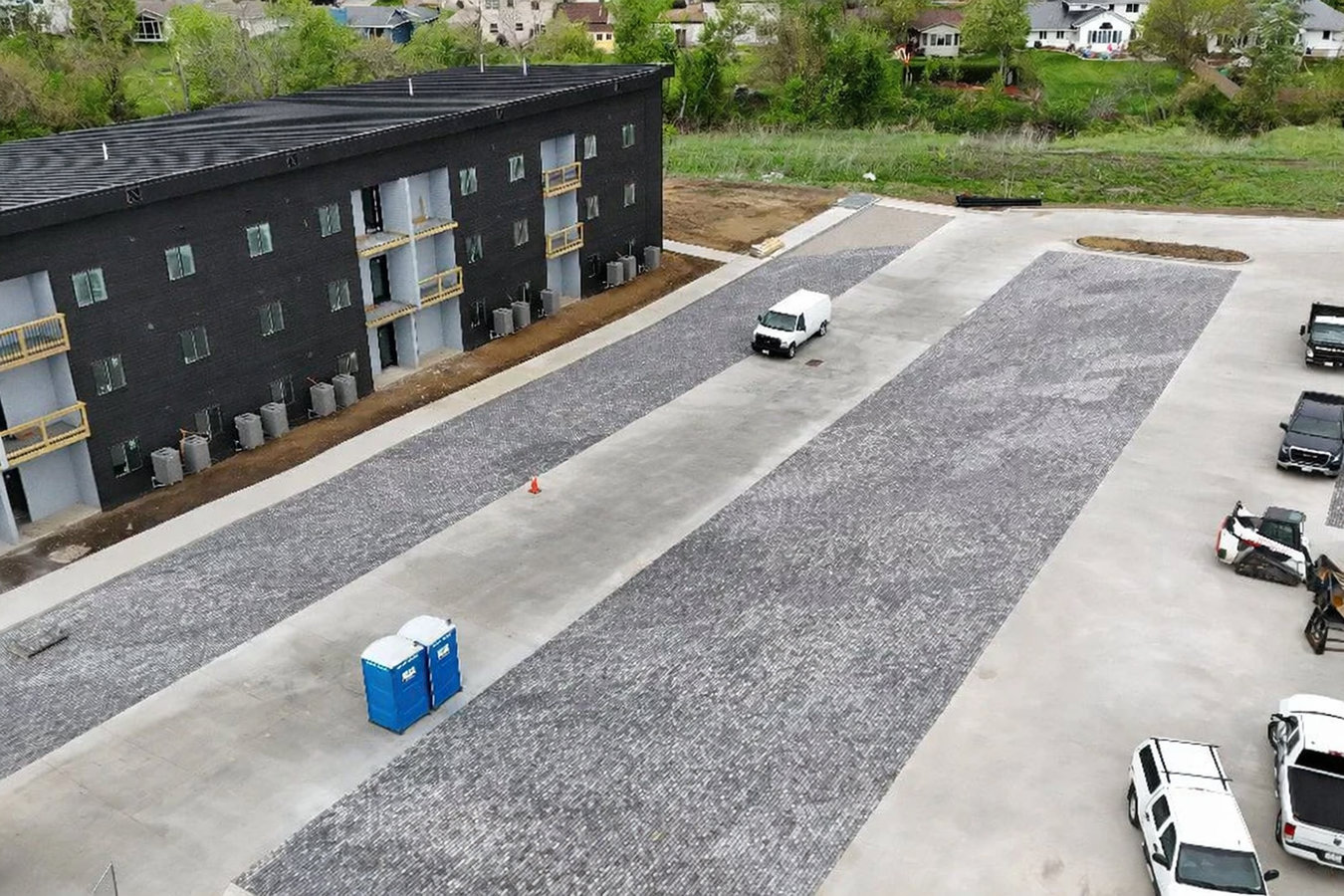
Gravel turns to mud, asphalt needs constant upkeep, and cracked lots are a liability. We build concrete parking lots that stay solid for decades - graded for drainage, built for Nebraska winters.
Concrete parking lot building in Grand Island means excavating the site, compacting a gravel base, and pouring a properly jointed concrete slab designed to carry vehicle loads and shed water - most residential and small commercial lots are complete in two to four days, then need about a week of curing before vehicle traffic.
If your current parking surface is cracking, pooling water, or turning to mud every spring, those problems point to failed base prep or an underpowered surface that was never built for Grand Island conditions. Concrete done right gives you 30 to 40 years of low-maintenance use. If you also need to upgrade your approach from the street, our concrete driveway building service handles that alongside the lot in a single project.
If you have filled cracks in your parking surface more than once and they keep reappearing after winter, the base underneath has failed. In Grand Island, water gets into a crack, freezes, and expands - widening it from the inside. Patching the surface does not address the underlying problem, and at that point replacement is almost always more cost-effective than continued repairs.
Puddles forming in the same spots after every rain mean the surface has either settled unevenly or was never graded correctly to direct runoff away from buildings. In Nebraska's wet spring season, that pooling water also seeps into small cracks, freezes in winter, and accelerates deterioration from the inside out.
A noticeable dip or bump when you drive across your parking area means the base underneath has shifted or settled. This is especially common in Grand Island's loess-derived soils, which can compact unevenly when disturbed or saturated. Uneven surfaces also create trip hazards for anyone walking across the lot.
Many older Grand Island properties still have gravel or packed-dirt parking areas. If you are tired of tracking gravel inside, dealing with mud after rain, or watching the surface wash away, a concrete lot is the permanent solution. It also adds real value to the property and makes the space look finished and well-maintained.
We handle the project from first shovel to final walkthrough. That means site prep and excavation, compacting a crushed aggregate base to the depth your soil and load requirements demand, setting forms, pouring the slab, and cutting control joints at regular intervals so any cracking happens in a neat, predictable line rather than running across your lot. We also grade the surface so water drains away from buildings rather than sitting on the concrete - a step that has a direct impact on how long the lot lasts. If you are also considering a concrete footings project for a nearby structure, we can coordinate both scopes of work.
For properties that see heavier vehicles - delivery trucks, RVs, or commercial equipment - we pour at greater thickness and can add reinforcement to handle the additional load. The extra material cost upfront is small compared to the repair and replacement costs that come from an undersized slab. We also carry permits and coordinate city inspections, which means the work is on record and meets local standards before you ever drive on it.
Suited to homeowners replacing a gravel or asphalt surface that will see everyday passenger vehicles. Clean, durable, and low-maintenance.
For properties that regularly see delivery trucks, RVs, farm equipment, or other heavy vehicles. Thicker concrete and additional reinforcement prevent cracking under load.
For small businesses and commercial properties where stormwater management and ADA compliance are part of the scope. We build to city permit requirements.
For Grand Island properties still on gravel or dirt. We remove the loose material, prep the base, and pour a permanent surface that stays clean and solid year-round.
Grand Island sits on loess-derived soils that settle unevenly when disturbed or saturated - and the freeze-thaw cycles here run from well below zero in winter to 90-plus degrees in summer. That combination is hard on any parking surface that was not built to account for it. A properly compacted base and correctly spaced control joints are not optional details in this climate - they are what keeps your lot from cracking apart within a few years. The National Weather Service Grand Island office documents the temperature extremes that shape how concrete performs here.
We work across the region, including properties in Kearney and Hastings, where the same soil and climate conditions apply. Whether you are in an older part of the city where drainage was never designed with a concrete lot in mind, or on a newer property where the lot is a fresh build, we bring the same approach: measure the site, understand the soil, and build the base before we think about the pour.
Call or message us and we will schedule a site visit - usually within one business day. We measure the area, check the existing surface, slope, and drainage, and ask how the lot will be used. You receive a written quote covering every part of the job before you commit to anything.
Once you sign off, we apply for the required permit with the City of Grand Island. Processing typically takes a few business days. We give you a confirmed start date and let you know what, if anything, needs to be cleared before the crew arrives.
The crew removes the existing surface, excavates to the required depth, and compacts a crushed gravel base. This is the step most contractors rush - we do not. The base layer is what keeps the slab from cracking or sinking as Grand Island's soils shift with the seasons.
We set forms, pour the concrete, finish the surface, and cut control joints at planned intervals. After the concrete cures, we walk you through the lot, show you the joint locations, and explain what to avoid during the curing period and how to maintain the surface long-term.
We respond to all estimate requests within one business day. No obligation, no sales pressure - just a written quote that covers every part of the job.
(308) 403-0892Grand Island's loess-derived soils require deeper excavation and more substantial compacted base layers than sandy or loamy sites. Every lot we build accounts for local soil conditions - not a generic approach copied from somewhere else.
We have completed parking lot and flatwork projects across Grand Island from older commercial corridors near downtown to newer properties on the north and west sides. Local drainage patterns, frost conditions, and permit requirements are not guesswork for us.
We apply for all required permits with the City of Grand Island before a shovel touches the ground and schedule the city inspector at the appropriate stage. You never have to navigate that process yourself, and you have documentation that the work was done correctly.
Your estimate spells out removal, base prep, concrete thickness, finishing, and cleanup before work begins. The American Concrete Pavement Association publishes the standards we build to - details at acpa.org.
Every parking lot we build is permitted, inspected, and backed by a written scope of work. When you pull out of your lot on a wet November morning and nothing shifts or pools, that is the result of doing the base work correctly before the concrete ever arrives.
Structural concrete footings poured below Grand Island's 36-inch frost line to support decks, additions, and outbuildings without seasonal movement.
Learn moreResidential concrete driveways built with the base prep and mix design to handle Nebraska's clay soils and freeze-thaw cycles for decades.
Learn moreGrand Island's construction season fills up fast - reach out now and we will schedule your site visit within one business day.