Loading...
Serving Grand Island, NE and surrounding areas. (308) 403-0892
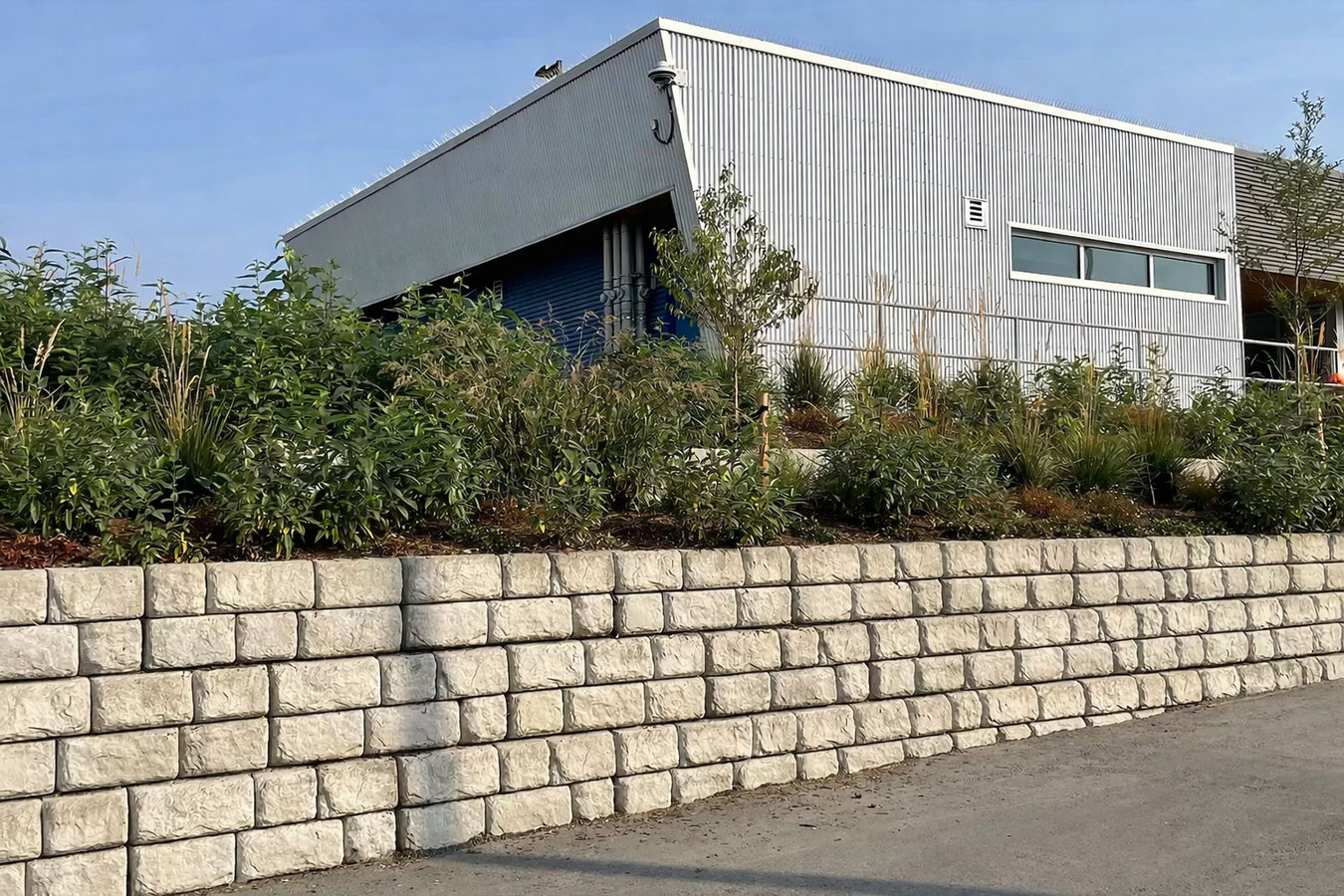
Soil moving toward your driveway or foundation is a slow problem that turns expensive fast. We stop it with walls built for Nebraska freeze-thaw and clay soil.
Concrete retaining walls in Grand Island hold back soil on slopes and hillsides by using a reinforced concrete structure anchored below the frost line - most residential wall projects take two to five days from excavation to final backfill, not counting the permit process.
If you have a slope that erodes after every rain, a yard that is too steep to use, or an existing wall that is starting to lean, those are signs the ground is moving and the problem is not going to fix itself. Grand Island's clay-heavy soil holds water and puts constant pressure on whatever is holding it back. Walls that do not account for that drainage pressure fail within a few years, even if everything else looks right. If your project also includes outdoor hardscaping, our concrete floor installation service can extend the usable area near the wall.
If you notice dirt, mulch, or gravel collecting at the base of a slope in your yard after a storm, the soil is eroding. Grand Island's spring rainstorms can drop a lot of water quickly, and that kind of runoff will get worse each season. A retaining wall stops the movement at the source before it reaches a driveway, fence, or foundation.
A retaining wall that has begun to lean toward the yard or shows wide horizontal cracks near the middle is under stress it cannot handle. In Grand Island's clay-heavy soil, a wall that has started to move will keep moving - especially after a wet spring or a freeze. The sooner you address it, the more likely a repair is possible instead of a full replacement.
Standing water against your house after heavy rain means the grade around your home is directing water the wrong way. Grand Island's older neighborhoods are especially prone to this as original grading shifts over the decades. A retaining wall paired with proper regrading can redirect that flow before it causes foundation damage.
If a hillside or raised bed is visibly encroaching on a hard surface - cracking the edge of a driveway, pushing against a fence post, or creeping toward a garage slab - the soil is on the move. Left alone, that pressure causes expensive damage to whatever is in its path. A wall stops the movement before it gets there.
We handle the full project from site assessment to final backfill. That means excavating the slope, digging the footing below Grand Island's frost depth, forming and pouring the wall or building it up as a block retaining wall, and installing gravel backfill and drainage pipe behind the wall before the soil goes back in. That drainage step is what separates a wall that lasts from one that fails in three years. If your project also benefits from addressing grade-related water flow, our concrete steps construction service pairs well with terraced retaining wall projects.
For walls taller than four feet, we pull the required permit from the City of Grand Island, coordinate the inspection, and handle all the paperwork. We also offer regrading work alongside the wall installation when the goal is redirecting water away from a foundation - something Grand Island's older neighborhoods often need after decades of grade shift.
Best for taller walls and applications where maximum strength is the priority. Poured walls handle higher soil loads and are the preferred choice for walls over four feet in height.
Suited to shorter garden-level walls and projects where a more modular appearance fits the landscaping. Concrete block is durable and handles freeze-thaw cycles well when properly installed.
For steep slopes that need to be broken into multiple levels. Multiple shorter walls are often more cost-effective and visually appealing than a single tall wall on a significant grade change.
For homeowners whose primary goal is redirecting water away from a foundation. The wall works together with regrading and drainage pipe to protect the home from water intrusion.
Grand Island sits in the Platte River valley, where the combination of clay-heavy soil, deep winter frost, and spring rainstorms creates conditions that are hard on anything holding back earth. Clay soil expands when wet and contracts when dry, which puts constant shifting pressure on a wall from behind. The ground freezes to roughly 36 inches in a hard winter, and any footing that does not reach below that depth will heave and tilt with every freeze-thaw cycle. These are not edge cases - they are the standard conditions every retaining wall in this area faces every year. Walls built without accounting for both of those factors fail on a predictable schedule.
In the older neighborhoods near downtown Grand Island, original lot grading has often shifted over decades of settling and tree root activity, meaning slopes that once drained well now direct water toward foundations. Homeowners in Hastings and Kearney face similar soil and climate conditions as Grand Island, and retaining wall projects in those communities follow the same engineering requirements. The Nebraska Department of Environment and Energy publishes frost depth guidance relevant to this work at dee.ne.gov.
We respond within 1 business day and schedule a free on-site visit. A retaining wall estimate done over the phone is rarely accurate - we need to see the slope, soil, and site access before we can give you a number you can rely on.
If your wall will be taller than four feet, we pull the required building permit from the City of Grand Island before any work begins. We handle the paperwork and keep you posted on the timeline - you do not need to make a single call to the building department.
We excavate the slope, remove soil, and dig the footing below Grand Island's 36-inch frost depth so the wall will not shift with winter freeze-thaw cycles. In Grand Island's clay-heavy soil, this step is where most of the project cost sits - and skipping it correctly is how walls fail.
We pour the footing, build or form the wall, and install gravel backfill and drainage pipe behind it to handle water pressure. After curing and any required inspection, we backfill the area and walk you through the finished work so you know what to look for each spring.
No phone guesses - we visit your property, look at the slope and soil, and give you a written number you can actually compare. No obligation.
(308) 403-0892Grand Island's ground freezes deeper than most homeowners realize - around 36 inches in a hard winter. We set every footing below that depth, which is the single most important reason a wall stays plumb after multiple winters instead of heaving and cracking.
Hall County soil holds water instead of draining it, and that water becomes pressure. We include gravel backfill and drainage pipe behind every wall we build. Skipping this step in Grand Island soil is how walls fail within a few years - we do not skip it.
Walls over four feet in Grand Island require a city permit and inspection before backfilling. We pull the permit, schedule the inspection, and keep you informed. When you sell your home, the documentation is there and the wall is on the record as a properly built permitted improvement.
We have built retaining walls across Grand Island - from older neighborhoods near downtown where lot grading has shifted for decades to newer subdivisions on the north and west sides. Local soil and climate conditions are not guesswork for us. For national concrete standards, see the American Concrete Institute.
Every wall we build in Grand Island is permitted, inspected, and documented. You get a structure that protects your property and your home's resale value for decades - not one that looks right today and fails after the third hard winter.
Extend the usable space near your wall with a professionally poured concrete floor for a garage, basement, or outdoor area.
Learn moreAdd access between terraced wall levels or connect a retaining wall project to an entry with durable concrete steps.
Learn moreSpring storm season is coming - call us today to lock in your estimate before our schedule fills up. Free on-site quotes, no obligation.