
Loading...
Serving Grand Island, NE and surrounding areas. (308) 403-0892
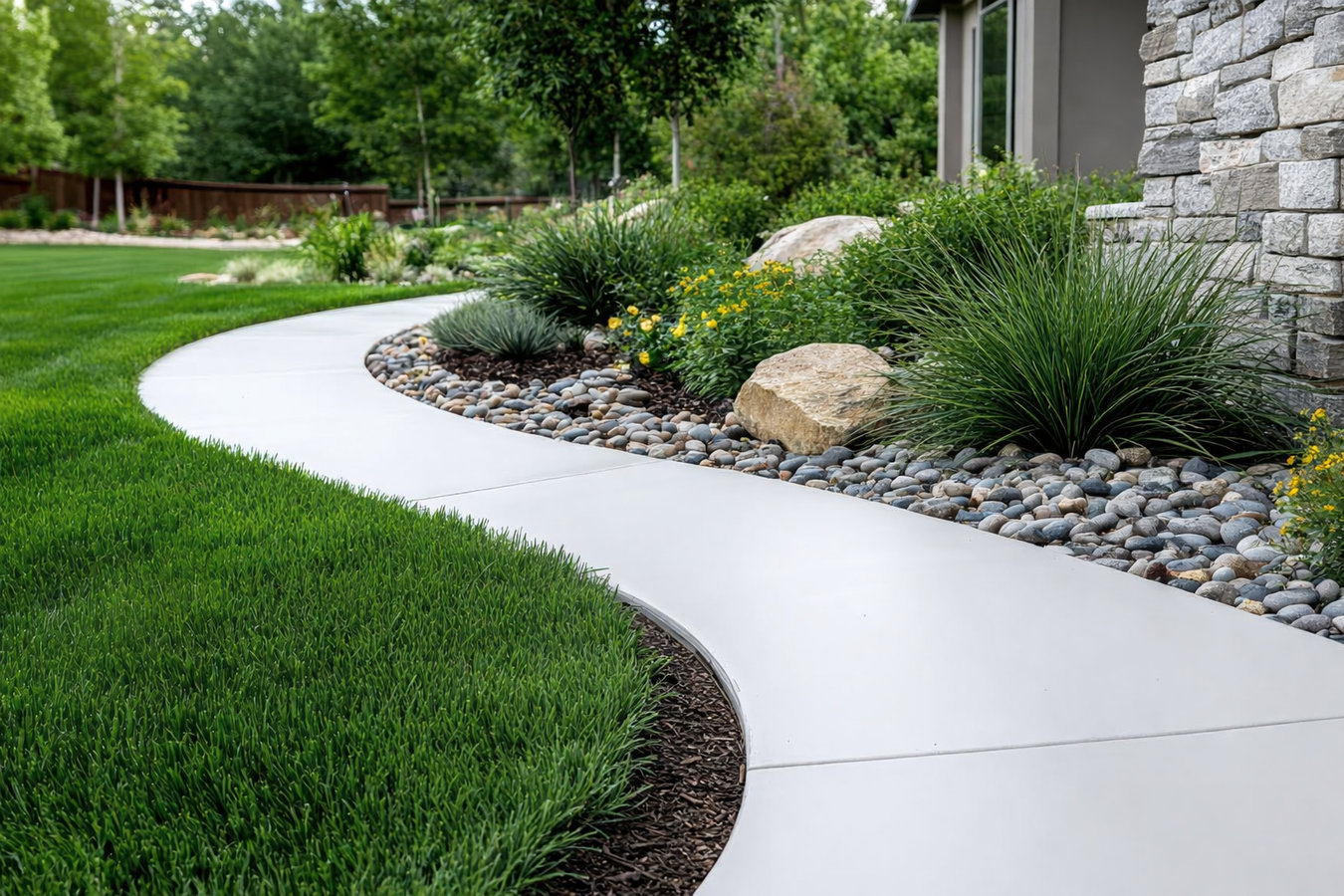
Cracked, heaved, or city-flagged sidewalks are a safety issue and a headache. We build replacements that hold up through Nebraska winters and pass city inspection the first time.
Hiring a contractor for concrete sidewalk building in Grand Island means removing the old surface or preparing bare ground, compacting a gravel base for drainage, setting wood forms, and pouring a finished slab - most residential sidewalk projects take one to two days of active work, with the concrete needing about a week before regular foot traffic.
The part most homeowners underestimate is how much the base preparation determines the outcome. Grand Island clay soils and freeze-thaw cycles put sidewalks under more stress than many parts of the country. A slab poured on a properly compacted gravel base with correct control joints will last 30 to 50 years. One poured without that prep often cracks and heaves within a few years. If your property also needs a new driveway, our concrete driveway building service can be combined with the sidewalk work in the same visit for a more efficient project.
If you can see a crack running across a panel, or one section is noticeably higher or lower than the one next to it, the slab has moved. In Grand Island, clay-heavy soil shifting through wet and dry seasons is often the cause. A raised edge is also a tripping hazard - something the city may flag if it is along a public right-of-way.
If the top layer of the concrete is peeling away in thin chips or the surface looks pocked and rough, the concrete is deteriorating from the inside out. This is especially common on older Grand Island sidewalks that went through decades of freeze-thaw cycles without a protective sealer. Once the surface starts breaking down, patching only delays the inevitable.
Grand Island's Public Works Department periodically inspects sidewalks along public streets and can issue notices to homeowners requiring repairs within a set timeframe. If you have received one of these letters, there is a deadline involved. Acting promptly gives you time to get multiple quotes and choose a contractor you trust rather than rushing.
If water sits on or alongside your sidewalk after a rain instead of draining away, the slab may have settled unevenly or the original base was not installed correctly. Standing water accelerates freeze-thaw damage during Grand Island winters and can direct water toward your foundation. A new sidewalk with proper slope and drainage solves this before it becomes a bigger problem.
We handle the full project from demo to cleanup - removing old concrete, excavating and compacting the base, setting forms, pouring and finishing the slab, and cutting control joints before the concrete sets. Standard residential sidewalks are poured four inches thick, which handles foot traffic easily. If your walk crosses a driveway apron where vehicles roll over it, we pour that section thicker to handle the load. A broom finish gives the surface the slight texture it needs to stay safe when wet - especially important heading into a Grand Island winter. When the project connects to a larger outdoor space, our garage floor concrete service handles interior slabs that tie into the same property.
We also offer sealed finishes for sidewalk projects - applying a concrete sealer before we leave. In Nebraska, this is worth considering because a sealed surface resists water intrusion, which is what causes the most damage during freeze-thaw cycles. It also makes the surface easier to clean and extends the life of the slab significantly. We walk through whether sealing makes sense for your specific project during the estimate.
Best for most Grand Island homeowners replacing a front walk, side path, or rear yard access path. Four-inch pour with broom finish and control joints.
When the walk crosses a driveway, that section is poured thicker to handle vehicle weight. Suitable for any property where foot and car traffic share the same surface crossing.
For homeowners who have received a notice from Grand Island's Public Works Department. We pull the permit, build to city standards, and make sure the work passes inspection.
Building a path where none exists - from a new addition, shed, garage, or landscaping feature to the street or home entrance. Graded for drainage from the ground up.
A lot of Grand Island's residential neighborhoods were built in the 1950s and 1960s, which means many of the original sidewalks are 60 to 70 years old - poured to older standards without the base depth or control joints that hold up in Nebraska's climate. When those slabs fail, it is rarely because the concrete itself is bad. It is because the ground underneath moved over decades of freeze-thaw cycles and wet-dry swings in the clay soil, and there was nothing in the installation to account for that. Homeowners in York and Seward face the same conditions, and we build to the same standard across the whole region.
Grand Island also has an active sidewalk inspection program through its Public Works Department. Homeowners can receive notices requiring them to repair or replace damaged sidewalk panels along the public right-of-way within a set timeframe. If you have received one of those letters, we can help you navigate the process - pulling the permit, building to city standards, and getting the inspection squared away - so the notice gets resolved rather than followed up. The City of Grand Island Public Works Department has details on sidewalk requirements and any active cost-share programs for homeowners.
We respond within one business day. You describe the area, the existing surface condition, and any city notices you have received. We schedule a site visit to measure, check conditions, and give you a written quote that breaks down every line item.
For most sidewalk work along a public street in Grand Island, we handle the permit with the city before a shovel touches the ground. You get confirmation that the work is properly documented - which matters when you sell your home.
The crew removes old concrete and hauls it away, compacts the gravel base, sets wood forms, and pours the concrete. We finish with a broom texture for traction and cut control joints at regular intervals so the slab flexes in a straight, predictable line.
We mark the area clearly and let you know exactly when it is safe to walk on - typically 24 to 48 hours, with full strength developing over about a month. We do a final check with you before we leave and answer any questions about long-term care.
Free on-site estimate. Written quote covering every cost. We respond within one business day.
(308) 403-0892We pull the required permit with Grand Island's Public Works Department before any work begins. The city has a record of the job, you have documentation for resale, and nobody gets a compliance notice after the fact.
Clay soils in the Grand Island area expand and contract with every season. We excavate to proper depth, compact the gravel base thoroughly, and cut control joints so ground movement does not translate into random surface cracks.
We have replaced and built sidewalks on streets across Grand Island from the older neighborhoods near downtown to the newer subdivisions on the west side. We know local soil conditions, drainage patterns, and what the city inspector expects.
Your estimate covers removal of the old concrete, base prep, the pour, finishing, and cleanup - no surprises after you sign. Verify contractor registration in Nebraska at dol.nebraska.gov.
Getting a sidewalk built correctly the first time means you are not dealing with city notices, tripping hazards, or another replacement job in five years. That is the standard we hold ourselves to on every project across Grand Island and the surrounding area.
More questions? Send us a message and we will get back to you within one business day.
Replace or install a concrete floor inside your garage - properly prepared, leveled, and finished for long-term use in Nebraska's climate.
Learn moreWhen the driveway and sidewalk both need attention, combining the projects into one job often saves on mobilization and demo costs.
Learn moreSummer schedules fill fast - call or message now to lock in your estimate before the season gets away from you.