Loading...
Serving Grand Island, NE and surrounding areas. (308) 403-0892
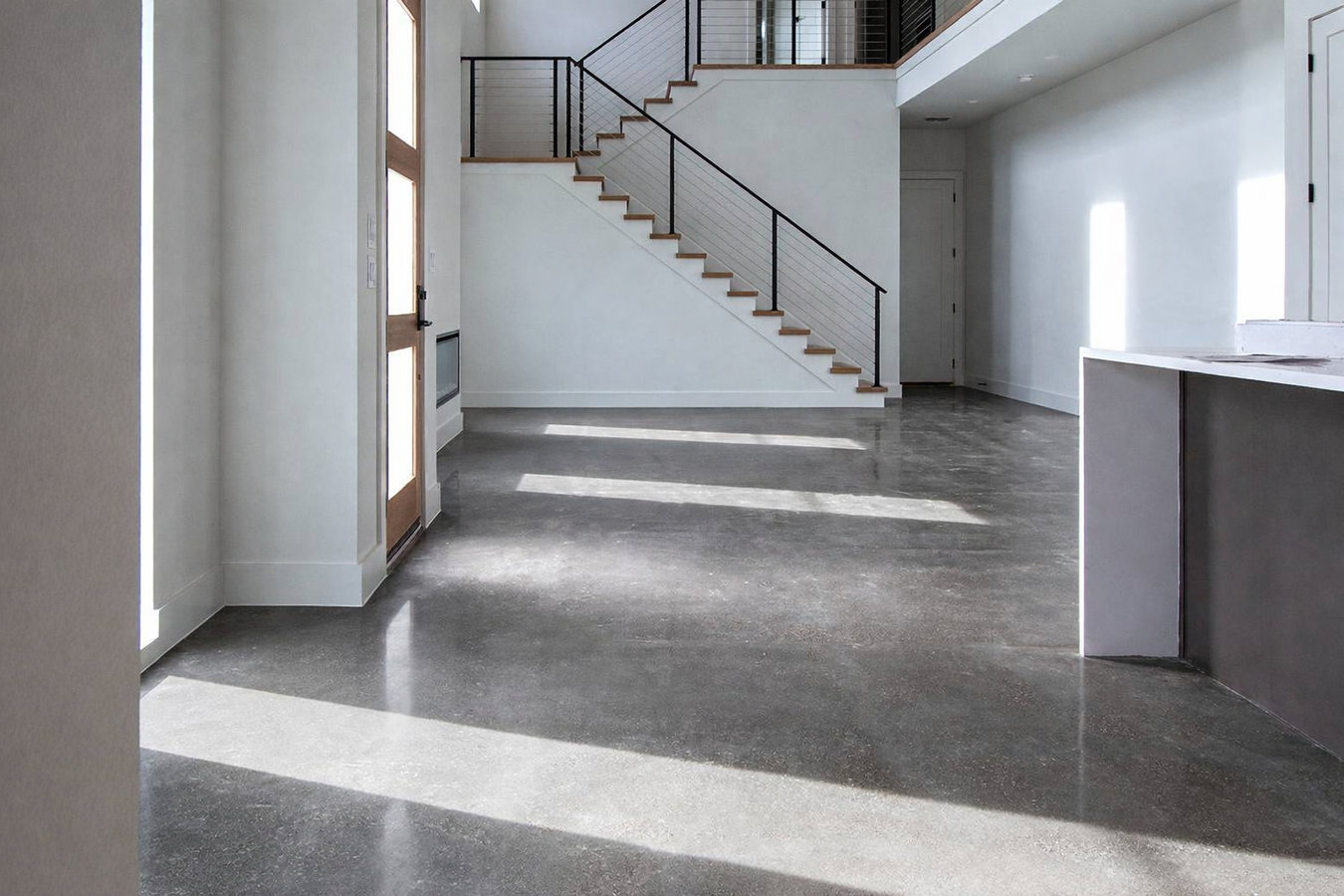
Cracked, damp, or uneven floors do not fix themselves. We pour garage and basement floors with the base prep and moisture protection Nebraska soil demands.
Concrete floor installation in Grand Island removes the old surface or prepares bare ground, compacts the base, and pours a reinforced slab with proper control joints - most residential garage or basement jobs take one to three days on-site, plus several days of curing before the floor can be used normally.
If your current floor is cracking in ways that keep getting worse, staying damp after spring rains, or heaving in spots, those are signs the original installation did not account for Grand Island's soil conditions or moisture environment. The Platte River valley has silty loess soil that shifts when wet, and some neighborhoods have a relatively high water table that pushes moisture upward through slabs that were never designed for it. A floor built with proper base prep and a vapor barrier handles those conditions without drama. If you also want a decorative finish on a floor or outdoor surface, our concrete pool decks service uses the same installation principles for exterior hardscapes.
A crack that has grown noticeably wider or where one side is now higher than the other means the slab is moving. In Grand Island, this kind of progressive cracking is often tied to loess soil shifting after a wet spring. It will not stop on its own, and patching a moving slab only buys a little time.
Standing water on a basement or garage floor after heavy rain means the surface has settled unevenly or cracks are letting moisture in from below. Grand Island's spring wet season makes this a common complaint, and a floor that stays damp encourages mold and eventually undermines the slab itself.
When the top layer starts chipping off or feels gritty underfoot, the concrete is deteriorating. This is especially common in older Grand Island homes where the original slab was poured without the freeze-thaw-resistant mixes available today. Once the surface breaks apart, patching rarely solves the underlying problem.
If part of your floor has pushed upward - creating a ridge or a section that rocks when you step on it - the soil underneath has shifted due to moisture or frost. This is a known issue in Grand Island neighborhoods near low-lying areas or older drainage infrastructure, and it needs evaluation by a professional, not just a patch.
We handle the full project from removal to final walkthrough. That means tearing out the old slab if there is one, hauling the debris, compacting the base, laying gravel and a moisture barrier where required, pouring the concrete, finishing the surface, and cutting control joints before it hardens. Control joints are the shallow grooves cut across the slab in a grid pattern - they give the concrete a place to crack in a straight, predictable line rather than randomly across the middle of your floor. We also handle all required permits with the City of Grand Island. If you want to extend your project to add a dedicated garage floor with a more durable or decorative finish, we can work that into the same estimate.
Finish options include a broom finish for traction (the practical choice for most Grand Island garages and utility areas), a smooth trowel finish for cleaner aesthetics, and stained or stamped options for spaces that will also be used for living or entertaining. The right finish depends on how the space will be used - we will make a recommendation based on your situation when we come out for the estimate.
Best for homeowners replacing a cracked or aging garage floor. Thickness depends on vehicle use - a standard two-car garage can get by with four inches, while heavier trucks or trailers benefit from five or six.
Suited to homeowners finishing a basement or replacing a damp, cracked floor. Includes a plastic vapor barrier under the slab - essential in Grand Island neighborhoods near the Platte River where the water table can be close to the surface.
For outbuildings, workshops, or storage areas where a clean, level concrete surface matters more than aesthetics. Broom-finished and built to handle the daily wear of tools, equipment, and foot traffic.
For homeowners who want a polished or colored finish in a living space, sunroom, or finished basement. Stained concrete is durable, easy to clean, and gives a custom look without the ongoing maintenance of tile or wood.
Grand Island sits in the Platte River valley on silty loess soil that behaves differently depending on moisture. When it is dry, it compacts well and makes a solid base. When spring rains saturate it, it softens and can shift - and a concrete slab poured over soil that has not been properly compacted and prepared will follow that movement. The city's older neighborhoods, particularly those developed in the 1950s through 1970s, often have existing basement floors poured thinner than current standards and without vapor barriers, which is why damp and cracking floors are so common in those areas. A replacement floor installed today with proper base work and moisture protection changes that problem permanently. Grand Island winters - with temperatures well below freezing and freeze-thaw cycles through spring and fall - also require a concrete mix designed for those stresses, not just a standard residential pour.
We serve Grand Island and the surrounding region, including homeowners in York and Seward, where soil and climate conditions are similar. The City of Grand Island Building Department publishes permit requirements for concrete slab work at grand-island.com.
Call or send a message and we will get back to you within 1 business day to schedule a free on-site visit. We need to see the space in person - the condition of the existing floor and the soil underneath can change the price significantly, and quoting over the phone rarely ends well for either party.
We pull the required building permit from the City of Grand Island before any work begins - this typically takes a few business days. Spring and early fall book up fast, so getting your estimate early gives you the best chance of landing a slot in the prime weather window.
If there is an existing floor, we remove it and haul away the debris. Then we compact the soil, add gravel if needed for drainage, and lay a moisture barrier for basement floors. This is the most disruptive day of the project - noise, dust, and crew movement in and out of the space.
The concrete arrives by truck, is poured and finished in a single session, and control joints are cut before it hardens. After curing, the city inspector signs off, and we walk you through the finished floor - when it is safe to move items back in and how to care for it before the first winter.
We will come out, look at the space and existing floor, and give you a written quote with no obligation - so you know exactly what you are paying for before work starts.
(308) 403-0892The most common cause of early floor failure in Grand Island is inadequate base preparation. We compact the subgrade, check for soft spots, and lay the right gravel depth before any concrete goes in. If the base is not right, nothing above it will be either.
Grand Island's position near the Platte River means some neighborhoods have a relatively shallow water table, and spring rains push moisture upward. We include a plastic vapor barrier under every basement floor as standard practice - not as an add-on. A floor without it will show damp spots within a few wet seasons.
We pull the required permit with the City of Grand Island before work begins on every qualifying job. That means a city inspector reviews the finished work before we close out. When you sell your home, the documentation is there and the floor is on the record as properly built.
We have poured floors in Grand Island's older central neighborhoods and newer subdivisions on the north and west sides. We know what the soil does here in a wet spring, and our mix and base work reflects that. The National Ready Mixed Concrete Association outlines concrete quality standards at nrmca.org.
Every floor we install in Grand Island is permitted, inspected, and built to handle what Nebraska weather and soil throw at it. You get documentation that protects you at resale and a floor that stays dry and level for decades - not one that starts cracking by year three.
Extend your outdoor hardscape with a slip-resistant concrete pool deck built to the same standards as your interior floor installation.
Learn moreSpecialized garage floor pours with heavier thickness options and durable finishes designed for daily vehicle use and Nebraska winters.
Learn moreSpring slots book fast - reach out today and we will get your estimate scheduled before the busy season starts. No obligation, no pressure.