Loading...
Serving Grand Island, NE and surrounding areas. (308) 403-0892
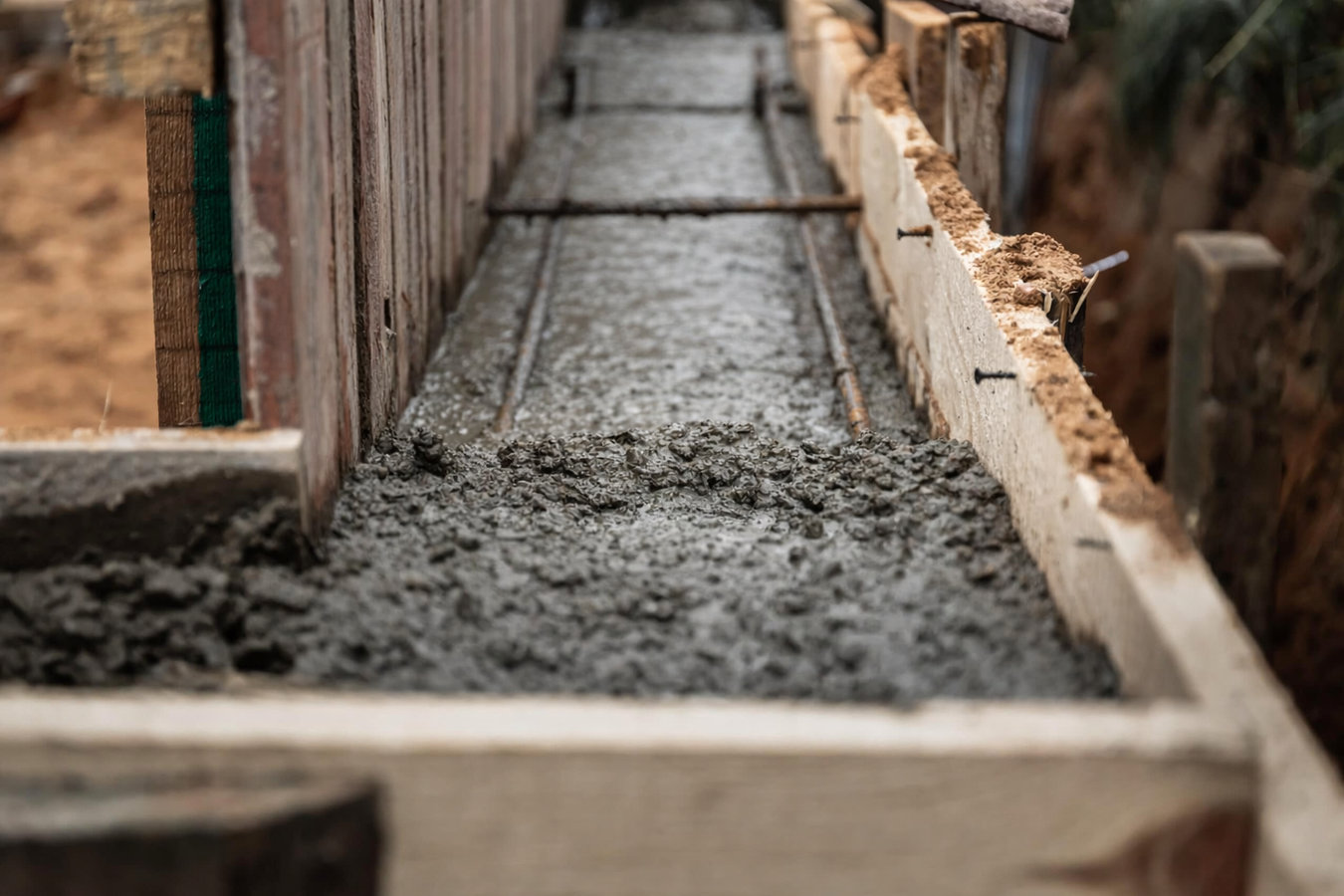
Every problem above ground starts below it. We install foundations in Grand Island designed for Nebraska clay soils, hard winters, and spring flooding.
Foundation installation in Grand Island covers excavating the site, forming and pouring concrete walls or a slab, waterproofing the exterior, and passing city inspections at each stage - most residential foundations take one to two weeks from the first shovel to the point where framing can begin.
Your foundation is the one part of your home that cannot be patched or replaced without a major project - which is why getting it right the first time matters more than anything else in a new build. Grand Island presents specific challenges: clay-heavy Platte River valley soil that moves with moisture, frost that can push 36 inches deep in a hard winter, and spring flooding that pressures anything in the ground. These are the conditions every foundation we install is built for. If your project starts with a flat slab rather than a full basement, our slab foundation building service covers that scope specifically.
If doors or windows have started jamming, leaving visible gaps at the corners, or require force to open, the frame of your house may be shifting. In Grand Island, clay soils expand and contract with moisture changes each year, which drives this kind of movement at the foundation level. This symptom is worth taking seriously rather than chalking up to the house settling.
Small hairline cracks in concrete are common, but cracks wider than a pencil, running diagonally, or growing over time are a different story. Grand Island freeze-thaw cycles put real stress on concrete every winter, and cracks that were not there last year may signal the foundation is under pressure it was not designed to handle. New or growing cracks warrant a professional look.
If water shows up on your basement floor or walls after heavy rain or spring snowmelt, your foundation waterproofing is failing or was never adequate. Grand Island sits in the Platte River valley where clay soil holds water close to the foundation longer than sandy soil. Even a small amount of recurring moisture is a sign the drainage situation needs attention now, before the problem grows.
Floors that slope noticeably in one direction, or that feel soft or springy when you walk on them, can indicate that the structure below has shifted or that support elements have settled unevenly. In older Grand Island homes with crawl space foundations, this is a common symptom. Spending money on new flooring before fixing the underlying foundation issue is money wasted.
We handle the complete scope from site assessment through final city inspection. That means excavation, compacted gravel base, formwork, steel reinforcement, the concrete pour, waterproofing of exterior walls, drainage system installation, and backfill. We also manage the permit process with the City of Grand Island from start to finish, including scheduling inspections at each required stage. If your project includes a parking area or concrete approach off the street, our concrete parking lot building service can be coordinated alongside the foundation work.
We work on new home construction, major additions, and structures being built over previously unimproved lots. Before any digging starts, we call Nebraska 811 to locate underground utilities - required by state law and something we do on every single job without being asked. Our goal is a finished foundation with clean documentation, a passed final inspection, and no surprises for you at closing.
For homeowners who want usable space below grade. More excavation and more concrete, but adds livable square footage to the home.
A middle option between a slab and a full basement. Provides access to plumbing and mechanicals without the full cost of a basement excavation.
The most cost-effective option for flat lots and single-story construction. Common in Grand Island neighborhoods built after World War II.
For homeowners adding square footage to an existing structure. We tie the new foundation to the existing one so both move as a unit.
Grand Island sits in a climate zone and soil type that creates specific demands for foundation work. The clay-heavy soil in the Platte River valley swells and shrinks with every wet spring and dry summer, putting lateral pressure on foundation walls and vertical movement under slabs. Add a frost line that can reach 36 inches in a hard winter, and you have a combination that punishes any foundation that was not designed for it. Waterproofing also matters more here than in drier climates - the spring flooding risk along the river corridor means water tables can rise quickly, and a foundation that was not properly sealed on the outside will eventually show it in your basement.
Grand Island also has a mix of housing stock spanning many decades, and older established neighborhoods close to downtown often have mature trees, buried debris from prior structures, and tight lot access that complicates excavation. A thorough site assessment before any digging begins - not just a quick look from the street - is especially important in these parts of the city. We serve homeowners across the region, including Columbus and Hastings, where soil conditions and frost depth requirements are similar to Grand Island.
Call or message us and we will respond within one business day. We ask what type of foundation you need, the size of the structure, and whether plans are drawn up. Most projects require a site visit before a firm number - conditions on your specific lot matter a lot to the final cost. You receive a written estimate that breaks out excavation, concrete, waterproofing, and permit fees separately.
We walk your property to assess soil conditions, equipment access, and any obstacles like trees or utility lines. We call Nebraska 811 before any digging starts to locate underground utilities - this is required by law and we do it on every job. We then apply for the required building permit through the City of Grand Island and confirm your start date once approval is in hand.
The crew excavates to the required depth - below the frost line so winter ground freeze cannot push the foundation around. We compact the base, install gravel drainage, set forms, and place steel reinforcing before any concrete goes in. A city inspector reviews the work at this stage to confirm the preparation meets local requirements.
The pour typically happens in a single day for a residential foundation. After curing, we apply waterproofing to the exterior walls and install drainage systems that direct water away from the base. Once the final inspection passes, we walk you through everything and hand off documentation. Your framing crew can start when you are ready.
Spring booking slots fill fast - reach out now and we will get you on the schedule before the season rush begins. We respond within one business day.
(308) 403-0892Foundations set above the frost line will heave and crack as the ground freezes and thaws each year. We excavate every foundation to the depth required for central Nebraska conditions - typically 36 inches - and the city inspection confirms this before we pour. This is the single most important thing that separates a foundation that lasts from one that fails.
Before any digging begins on your property, we call Nebraska 811 to have underground utilities marked. This free state service is required by law and protects your property from accidental line strikes. It is something a professional crew does automatically - if a contractor skips this step, that tells you something about how they approach every other part of the job.
We apply for every required permit through the City of Grand Island and schedule city inspections at each required stage of the project. You never have to visit the building department or track the inspection schedule yourself. The permit documentation stays on file and travels with your property - protecting your investment at resale.
We have installed foundations across Grand Island and Hall County, working in the clay-heavy soils and seasonal conditions that characterize this part of Nebraska. The University of Nebraska Extension in Hall County publishes soil and building guidance specific to this region that informs how we approach every project here.
You can verify any Nebraska contractor is properly registered before hiring through the Nebraska Department of Labor. Our registration is current and our insurance certificates are available on request - we think that is the minimum you should expect from any contractor working on a project this significant.
Concrete driveways and parking surfaces installed at the same time as your foundation to complete the project in one mobilization.
Learn moreA focused slab-on-grade pour for single-story homes, additions, and outbuildings where a full basement is not needed.
Learn moreSpring booking slots go fast - contact us now to lock in your start date and get a written estimate before the summer rush.